The death we are seeking
There is a kind of dying that is part of genuine spiritual development. The ego must eventually surrender its identification with the Lower Self—the part that insists on separation, control, withholding and destruction. What dies is not the person. What dies is an illusion about who we are.
This is what the Pathwork Guide means by “dying into” ourselves.
We go into the pain we have spent our lives avoiding. We let the defenses fall away. We allow the old images, intentions and strategies to be seen and felt. Something in us that has been holding itself apart begins to soften.
And then something else happens.
We discover that underneath all this defendedness is life.
This is why we do not want to bypass the pain. We need to go through it. The way out is through.
Dying into versus wanting to die
There is an important distinction to be made between “dying into” and “wanting to die.”
When a Worker says, “I just want to die,” we cannot assume they are talking about spiritual transformation. Sometimes a person is describing the exhaustion of an old part of themselves that can no longer continue in the same way. But sometimes they are experiencing genuine suicidal thoughts.
These are not the same thing.
“Dying into” means allowing an old consciousness to surrender so that more life can emerge. Suicidal thinking seeks to end the experience of embodied life because the pain feels unbearable.
One moves into life. The other seeks to escape from it.
As Helpers, we need to be able to hear the difference.
If a Worker speaks about wanting to die, we don’t spiritualize it or reassure ourselves that this is simply a sign of transformation. We become present and curious. What do they mean by that? Are they speaking metaphorically about wanting an old way of being to end, or are they thinking about actually ending their life?
We ask directly.
There is nothing spiritual about being afraid to ask.
When the Worker wants to escape
This is where the Helper’s groundedness becomes especially important.
If the Worker is having suicidal thoughts or is in danger of harming themselves, this is no longer simply material for spiritual exploration. Their immediate safety comes first. We stay present, take what they are saying seriously, and help them connect with appropriate crisis or professional support.
We don’t try to talk them out of their feelings. And we don’t make ourselves solely responsible for keeping them safe.
The Helper’s task is not to rescue the Worker. It is to remain in reality.
This may be one of the clearest places where the difference between the Higher Self and the Lower Self becomes visible. The Higher Self does not need to destroy the body to end the pain. It wants the distortion to die so that life can return.
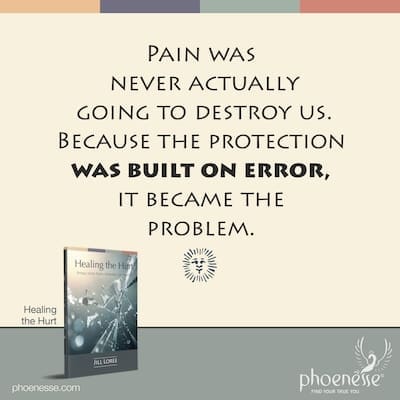
Pain was never actually going to destroy us. Because the protection was built on error, it became the problem.
Let the original error die
We must become willing to let the part of us that says “I can’t” die.
Let the part that says “I must have my way” die.
Let the part that says “I will never trust anyone again” die.
Let the part that says “I have to protect myself from feeling” die.
These parts once seemed necessary. As children, we believed we had to protect ourselves from pain that felt unbearable. But that pain was never actually going to destroy us. Since the protection was built on error, it eventually became the problem.
But these parts are not who we ultimately are.
They are what block us from the truth of who we are.
Our work is to let them reveal what they are holding.
And then we let them change.
This is what we die into.
The Helper also has to die
Perhaps this is the final lesson for the Helper.
We, too, must continually die into the work.
We must let go of needing to be a good Helper. Let go of knowing what should happen next. Let go of wanting the Worker to heal according to our timetable.
We must die to our own certainty.
Then we can meet the Worker where they actually are.
Not where we think they should be.
Not where we hope they will go.
But here.
In this moment.
Where something new can happen.

Return to Healing the Hurt Contents