Bible Me This
Bible Me This
A collection of Pathwork teachings from Q&As about the Bible
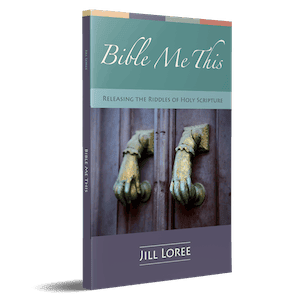

THE REAL.CLEAR. SERIES, Book Three
Bible me this: Releasing the riddles of Holy Scripture through questions about the Bible
The Bible is confusing for many of us. It’s like the Riddler teasing Batman with his “riddle me this” taunts. But what if we could understand the Bible better?
Bible Me This is a collection of in-depth answers to a variety of questions people asked the Pathwork Guide about the Bible.
Here is the Pathwork Guide’s call for questions:
“It would be most helpful and beneficial for you, my friends, if you became more familiar with the Bible. I am most eager and willing to help you understand this great document. To disentangle for you what belongs on which level.
For this great book is a combination of fragments of historical accounts; of symbolic meanings; and of the greatest truths; of distortions deriving from human limitation of consciousness; of existing cultural conditions that were “right” at that time, but are no longer so today.
I would like to lift up the jewels of truth contained in this book, separating the grains from the husks. So that you can appreciate and benefit from the timeless wisdom of these messages. I suggest that you ply me with questions. You have a whole month to prepare. And I promise you that I will give you interpretations. These answers will be most useful and helpful for everyone. This will open a new horizon for you.”
— The Pathwork® Guide lecture #243

Even with its errors, the Bible has no equal. Few people can grasp the meaning that exists on all levels.
Chapter 1: Understanding the Bible
Contents
Preface to Bible Me This | Podcast
1 Understanding the Bible | Podcast
The Pathwork Guide explains that the Bible was never meant to be simple or obvious. Its use of symbolism was intentional, protecting deeper truths until people were ready to understand them. Even today, without self-awareness, it's easy to misinterpret what's written and miss its deeper meaning.
The Bible has meaning on multiple levels: historical, symbolic, and psychological. While some stories reflect real events, they also represent inner human experiences. This makes the Bible a living document—one that reveals more as our awareness grows.
Rather than searching for fixed answers, we are encouraged to approach it with humility, patience, and a willingness to grow into understanding.
2 Understanding myths | Podcast
Myths are not made-up stories or falsehoods. They are meaningful ways of expressing truth. Like symbols, they present complex ideas in a form we can grasp, often through images or stories.
While symbols can be personal and vary from person to person, myths point to universal truths. They are designed to communicate deeper realities about life, human nature, and spiritual development.
3 Myth: Tower of Babel | Podcast
The biblical story of the Tower of Babel is a powerful symbol of the inner human condition. Rather than focusing on language as a literal barrier, the story points to the many "languages" within us—our conflicting thoughts, emotions, and desires.
This inner confusion shows up in the outer world. Miscommunication, conflict, and chaos are not random—they reflect what is happening inside us. The breakdown in communication between people is, in this sense, a living expression of the "Babel" within.
The Guide also highlights how our striving for perfection contributes to this fragmentation. Like building a tower to reach heaven, we attempt to present an idealized version of ourselves that doesn't match our reality. This creates pressure, failure, and deeper disconnection.
At its core, this myth reflects the interplay of active and receptive forces—often associated with masculine and feminine qualities—that exist within every person. When these forces are suppressed or misdirected, they become destructive, leading to imbalance both within individuals and between people.
The Guide also reframes key elements of the story, including the Tree of Knowledge and the Tree of Immortality. These symbolize stages of human development.
We are not meant to receive truth or certainty instantly. Instead, we must grow into awareness through experience, struggle, and self-discovery. True knowing comes from within, not from external belief.
5a Biblical passages explained, Part One | Podcast
Here, the Pathwork Guide offers deeper explanations of well-known biblical passages. Together, these teachings uncover hidden meanings and help unravel many of the Bible's mysteries.
What is the true meaning of "turn the other cheek"?
What does it mean that "he who wants to win his life will lose it—and he who gives it up will win it"?
Why did Jesus say to Peter, "Upon this rock I will build my Church… and I will give thee the keys of the Kingdom of Heaven"?
In Exodus, why did manna spoil when gathered for more than a day—except on the Sabbath?
What is the deeper meaning behind the teaching: "To those who have, more will be given—and to those who have not, even what they have will be taken away"?
How should we understand the idea that "all things work together for good for those who love God"?
What did Jesus mean when he said, "Come as a little child"?
And why "the meek shall inherit the earth"?
5b Biblical passages explained, Part Two | Podcast
The Pathwork Guide continues to shed light on some of the most challenging and often misunderstood teachings in the Bible—revealing their deeper spiritual meaning.
What did Jesus mean when he said,
"Unless you eat of the flesh of the Son of Man and drink of his blood, you have no life in you"?
How should we understand the Old Testament teaching:
"Life for life, eye for eye, tooth for tooth"?
Why does Scripture repeat the idea that,
"to those who have, more will be given—and from those who have not, even what they have will be taken away"?
And what is the true meaning behind Jesus' words:
"It is not what goes into the mouth that defiles a person, but what comes out"?
5c Biblical passages explained, Part Three | Podcast
In this section, the Pathwork Guide explores some of the Bible's most striking and often misunderstood passages—revealing their deeper psychological and spiritual meaning.
What does it really mean to "commit adultery in the heart"?
Why would Jesus say to "pluck out your eye" if it offends you?
And what is the true meaning of "the Word" being with God from the beginning?
We also explore the role of the "Spirit of Truth," the warning that "those who take the sword shall perish by the sword," and the powerful symbolism of the "beast" described in Revelation.
In addition, this section looks at the deeper meaning of being "poor in spirit," and the call to live without anxiety about material needs.
Taken literally, these teachings can seem confusing—or even extreme. But through the lens of inner development, they point to something far more practical. They reveal how our thoughts, intentions, and inner attitudes shape our experience.
They also show the importance of responsibility, self-awareness, and alignment with truth.
As these teachings are unpacked, we begin to see that the Bible is not asking us to follow rigid rules. Instead, it is guiding us toward a deeper understanding of ourselves—so we can live with more clarity, trust, and inner freedom.
6 Commandments explained | Podcast
In this chapter, the Pathwork Guide offers deeper insight into four of the Ten Commandments.
For example, the teaching about the Sabbath is reinterpreted, not as a rigid rule, but as a call to balance—between work, rest, and inner reflection. True renewal comes not from ritual alone, but from ongoing self-awareness and spiritual effort.
The meaning of "thou shalt not kill" is expanded beyond the physical act. We can "kill" through destructive thoughts, attitudes, and emotional patterns—toward others and ourselves.
The path forward is clear: through deep self-awareness, honesty, and responsibility, we stop harming life and begin aligning with truth.
7 Reincarnation in the Bible | Podcast
Early Christians understood reincarnation as a reality. Later, church fathers saw how the knowledge of reincarnation was misused in Eastern traditions.
The intention behind removing this teaching from the Bible was to combat a lazy, fatalistic attitude. This kind of fatalism hindered people's development.
But the opposite extreme—denying the truth of reincarnation—brought about another damaging attitude which has also hindered our development.
While baptism is often associated with water as an outward act, the Pathwork Guide explains that its true significance lies in being "reborn of water and spirit." Water symbolizes the ever-changing flow of our emotions and truth, while spirit represents our thoughts, will, and conscious intention.
True baptism happens when we align all of these with love, truth, and a higher purpose.
A key step in this process is self-recognition. Before transformation can occur, we must be willing to see our Lower Self—our distortions and harmful patterns—and take responsibility for them. From there, real change becomes possible.

©2015, 2026 Jill Loree. All rights reserved.

Real.Clear. series | Holy Moly • Finding Gold • Bible Me This • The Pull • Pearls • Gems • Bones • Nutshells • Speaking Pathwork
We Can Heal | After the Ego • Blinded by Fear
All essays | Get a Better Boat • Living Light • Latest essays
Self.Care. series | Spilling the Script • Healing the Hurt • Doing the Work
More books | Walker • Word for Word • Spiritual Laws • Keys
To share, choose your platform